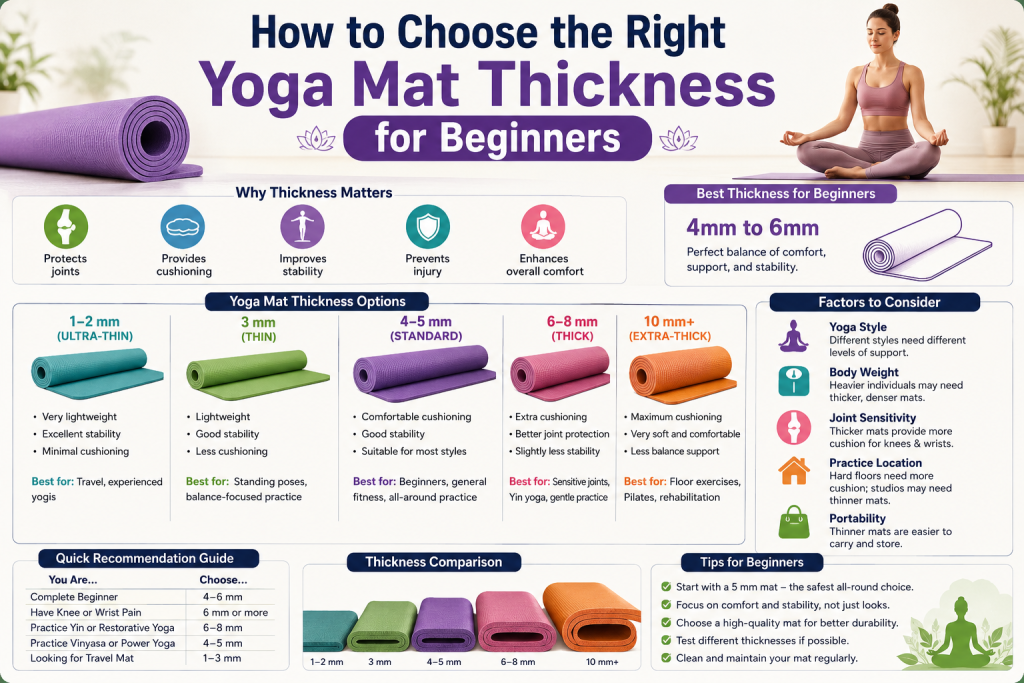
How to Choose the Right Yoga Mat Thickness for Beginners
Introduction
KickStarting a yoga journey is an Very exciting step toward intransitive flexibility, strength, uncountable , and overall well-being. However, before mastering poses and breathing techniques, one of the most important countable Decision a beginner must make is choosing the right yoga mat. While Most People Just Focus On Colour, design, or brand, mat thickness is one of the most important factors Impacting comfort, stability, and performance with durability.
The right yoga mat thickness can help prevent from discomfort, protect your All joints, improve Living in a balance, and make your practice more Joyful. On the other hand, choosing the Bad thicker may lead to poor comfort & stable, unwanted strain, or discomfort during practice.
This guide will help beginners understand yoga mat thickness, the available options, and how to select the perfect mat based on their needs and practice style.
Why Yoga Mat Thickness Matters
Yoga mats serve several important purposes:
- Provide cushioning for joints
- Create a Fixed & Blanced surface
- Improve comfort while practice
- Protect the body from hard surface
- Support balance & stable Pitch
Thickness directly affects how your body feels during yoga Practice sessions . A small & thicker mat offers more cushioning(less severe ), while a thinner mat provides greater stability and connection with the Base Or Ground.
Finding the right balance between comfort and stability is essential for beginners.
Understanding Standard Yoga Mat Thickness
Yoga mats are generally available in several thickness categories:
1. Ultra-Thin Mats (1–2 mm)
These mats are lightweight and portable.
Advantages:
- Easy to carry
- Excellent balance & Good Support
- Ideal for travel
Disadvantages:
- Minimal cushioning
- Less comfortable on hard surfaces
Best For:
- Experienced yogis
- Frequent travelers
Beginners typically find these mats too thin for regular practice.
2. Thin Mats (3 mm)
A 3 mm yoga mat offers a balance between portability and support.
Advantages:
- Lightweight
- Good stability
- Easy storage
Disadvantages:
- Limited cushioning for knees and wrists
Best For:
- Standing yoga poses
- Yoga practitioners who prioritize balance
Some beginners may enjoy 3 mm mats if they practice on softer flooring.
3. Standard Mats (4–5 mm)
The most popular option for beginners.
Advantages:
- Comfortable cushioning
- Good stability
- Ideal for exercises on the floor
- Widely available
Disadvantages:
- Slightly heavier than thinner mats
Best For:
- Beginner yoga practitioners
- Home workouts
- General fitness routines
For most beginners, a 4–5 mm mat is the ideal choice.
4. Thick Mats (6–8 mm)
These mats provide extra comfort.
Advantages:
- Superior cushioning
- Better joint protection
- Comfortable on hard floors
Disadvantages:
- Reduced balance stability
- Bulkier to transport
Best For:
- People with sensitive knees
- Joint discomfort
- Gentle yoga practices
Many beginners appreciate the additional comfort of a 6 mm mat.
5. Extra-Thick Mats (10 mm and Above)
These mats resemble exercise mats more than traditional yoga mats.
Advantages:
- Maximum cushioning
- Excellent comfort
- Suitable for floor exercises
Disadvantages:
- Inadequate support for equilibrium
- Less suitable for traditional yoga poses
Best For:
- Stretching routines
- Pilates
- Rehabilitation exercises
They are generally not recommended for beginners focused primarily on yoga.
Best Yoga Mat Thickness for Beginners
If you are completely new to yoga, experts generally recommend:
4 mm to 6 mm Thickness
This range provides:
- Adequate joint protection
- Comfortable support
- Good balance
- Versatility across different yoga styles
A 5 mm mat is often considered the “sweet spot” for beginners because it combines comfort and stability effectively.
Consider Your Yoga Style
The type of yoga you practice influences the ideal mat thickness.
Hatha Yoga
Hatha yoga involves slower movements and longer pose holds.
Recommended Thickness:
- 4 mm to 6 mm
These mats provide enough cushioning while maintaining stability.
Vinyasa Yoga
Vinyasa includes flowing movements and transitions.
Recommended Thickness:
- 4 mm to 5 mm
A slightly thinner mat improves balance during dynamic movements.
Yin Yoga
Yin yoga involves long-held seated and floor poses.
Recommended Thickness:
- 6 mm or more
Extra cushioning enhances comfort during extended holds.
Restorative Yoga
This gentle style focuses on relaxation.
Recommended Thickness:
- 6 mm to 8 mm
Maximum comfort supports relaxation and recovery.
Consider Your Body Weight
Body weight also affects the ideal mat thickness.
Lightweight Individuals
People with lower body weight may find:
- 4 mm mats comfortable
- Adequate support without excessive cushioning
Average Weight Individuals
Most people benefit from:
- 4 mm to 6 mm mats
This range balances support and stability.
Heavier Individuals
Heavier practitioners may prefer:
- 6 mm mats
- Higher-density materials
These provide better pressure distribution and comfort.
Consider Joint Sensitivity
Joint health is an important factor.
Sensitive Knees
Choose:
- 5 mm to 6 mm mats
Additional cushioning reduces pressure during kneeling poses.
Sensitive Wrists
Look for:
- Dense materials
- Moderate thickness
Too much softness may strain wrists during weight-bearing poses.
Lower Back Discomfort
Sitting and lying down can be made more comfortable with a little thicker mat.
Home Practice vs Studio Practice
Your practice environment matters.
Home Yoga
If practising at home:
- 5 mm to 6 mm mats work well
- Comfort is usually the priority
Yoga Studio
For studio use:
- 4 mm to 5 mm mats are easier to carry
- Offer a good balance between portability and comfort
Outdoor Yoga
For outdoor sessions:
- Slightly thicker mats provide insulation from uneven surfaces
Material Matters Too
Thickness is important, but material also affects performance.
PVC Mats
Pros:
- Durable
- Affordable
- Excellent grip
Cons:
- Less eco-friendly
TPE Mats
Pros:
- Lightweight
- Eco-conscious
- Comfortable
Cons:
- Less durable than PVC
Natural Rubber Mats
Pros:
- Outstanding grip
- Eco-friendly
Cons:
- Heavier
- Higher cost
Cork Mats
Pros:
- Natural material
- Good traction
- Antimicrobial properties
Cons:
- More expensive
Common Mistakes Beginners Make
Choosing the Thickest Mat Available
Many beginners assume thicker is always better.
However:
- Excessive cushioning reduces balance
- Standing poses become less stable
Prioritizing Appearance Over Function
Attractive colors are nice, but comfort and support matter more.
Ignoring Material Quality
A poorly made mat may wear out quickly regardless of thickness.
Buying Extremely Cheap Mats
Low-cost mats often:
- Tear easily
- Lose grip
- Flatten over time
Investing in a quality beginner mat provides better long-term value.
Signs Your Yoga Mat Thickness Is Right
Your mat is likely suitable if:
- Knees feel comfortable during poses
- You can balance confidently
- Wrists are not strained
- You enjoy practicing regularly
- The mat feels supportive without being overly soft
Recommended Thickness Summary
| User Type | Recommended Thickness |
|---|---|
| Complete Beginner | 4–6 mm |
| Sensitive Knees | 6 mm |
| Vinyasa Yoga | 4–5 mm |
| Yin Yoga | 6 mm+ |
| Travel Yoga | 1–3 mm |
| Home Practice | 5–6 mm |
| Balance-Focused Practice | 4 mm |
How Long Does a Yoga Mat Last?
The lifespan of a yoga mat depends on:
- Material quality
- How often it is used
- Cleaning habits
- Storage conditions
On average:
- Budget mats: 1–2 years
- Mid-range mats: 3–5 years
- Premium mats: 5 years or more
Proper maintenance helps extend durability.
Tips for Maintaining Your Yoga Mat
To keep your mat in excellent condition:
- Wipe it after each session.
- Deep clean regularly.
- Avoid prolonged sun exposure.
- Store rolled loosely.
- Keep it dry between uses.
Regular care preserves grip and cushioning.
Final Thoughts
Choosing the right yoga mat thickness is one of the most important decisions for any beginner. While there is no universal solution, most new practitioners find that a mat between 4 mm and 6 mm offers the perfect combination of comfort, support, and stability.
A 5 mm yoga mat is often the safest choice because it accommodates a wide variety of yoga styles and fitness levels. By considering factors such as yoga style, body weight, joint sensitivity, and practice location, you can confidently select a mat that supports your wellness journey.
Remember, the best yoga mat is the one that encourages you to practice consistently. Prioritize comfort, quality, and functionality, and you’ll create a strong foundation for years of enjoyable yoga practice.